Going to Every Show Doesn’t Make You the Biggest Fan
Somewhere along the way, being a fan stopped being about love and started being about numbers.
How many shows you’ve been to. How many dates on the tour you caught. How close you were to the barrier. How many hours you queued.
It’s become a quiet, relentless competition – one that rarely gets acknowledged, but is felt deeply by so many people watching from the outside.
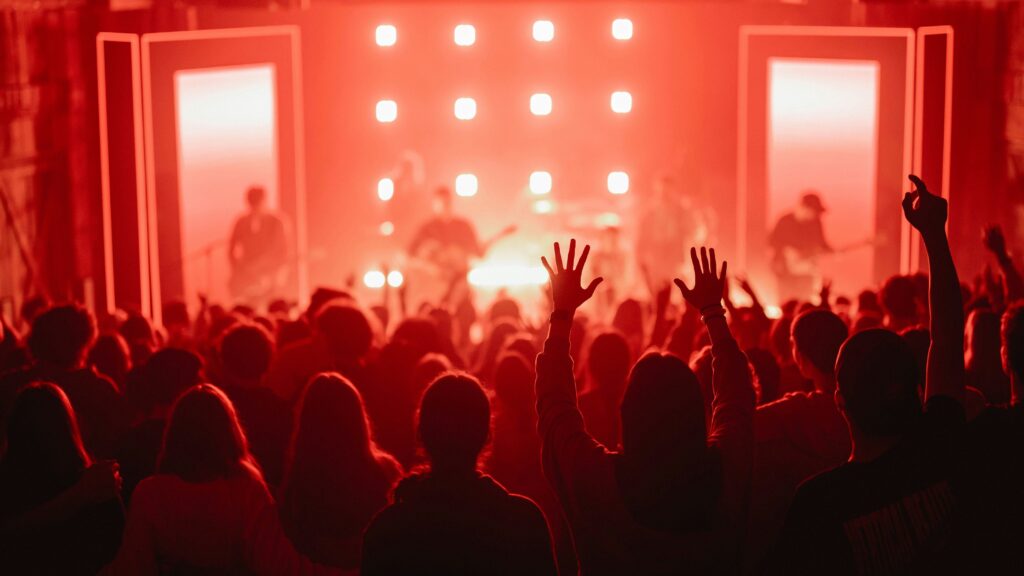
I love live music more than anything. Few things in life feel as electric as the moment the lights drop and the first note rings out across a room full of people who all care about the same thing. Gigs are sacred. They’re where songs become lived memories, where strangers become friends and where artists and audiences meet somewhere in the middle.
But there’s an uncomfortable truth we need to talk about: going to every show does not make you a better fan and treating fandom like a scoreboard does far more harm than good.
When Fandom Becomes Point Scoring
In recent years, especially with artists like Taylor Swift, Harry Styles and The 1975, fandom has started to feel less like a community and more like a competitive sport.
“I went to 5 shows.”
“I saw them in 3 countries on that tour.”
It’s rarely said outright, but the implication hangs heavy in the air: my devotion counts more than yours.
Seeing more shows can easily turn into point scoring. A quiet hierarchy where attendance = loyalty, and loyalty = status. Where being able to afford multiple tickets, travel, accommodation and time off work somehow becomes proof of being the ‘biggest’ fan.
But that logic is deeply flawed and incredibly exclusionary.
Not Everyone Has the Same Access
Let’s be honest about what going to multiple shows actually requires.
- Money
- Time
- Physical ability
- Mental energy
- Geography
Rising ticket prices have turned gigs into luxury experiences. Add travel, accommodation, food, merch and suddenly a single show can cost hundreds. For many fans, that’s simply not possible and that doesn’t make their love for the music any less real.
- Some people are disabled or chronically ill.
- Some have caring responsibilities.
- Some work multiple jobs or irregular hours.
- Some live nowhere near major tour routes.
And some just can’t justify draining their bank account for the sake of being seen as ‘dedicated’.
When attendance becomes a status symbol, fandom quietly shifts from passion to privilege.
The Reality Check: Money, Access and Who Gets Left Out
Here’s the part that often gets glossed over: going to multiple shows is a privilege.
Live music is more expensive than it’s ever been. Over the past decade, average ticket prices for major tours have more than doubled, while additional costs – travel, accommodation, food, merch – continue to rise. A single arena or stadium show can easily cost several hundred pounds once everything is factored in. For many fans, attending even one date requires saving, budgeting, or sacrificing something else.
Now imagine doing that 5, 10 or 15 times.
Access to live music is shaped by income, location, job flexibility, caring responsibilities, disability, health, age and countless other factors. Not everyone lives near tour stops. Not everyone can queue for hours. Not everyone can take time off work or afford last minute resale prices when demand spikes.
When repeat attendance is framed as ‘ultimate devotion’, it unintentionally reinforces a hierarchy built on resources rather than passion.
It also creates a quieter, more uncomfortable side effect: fans who can’t attend multiple shows start to feel like they don’t belong. Like their love is somehow lesser. Like they’re on the outside of a club they deeply care about.
That sense of exclusion is particularly painful because music fandom is often where people go to feel seen, understood and connected. Turning it into a measure of financial or logistical capability undermines everything it’s meant to be.
Being There Early Still Matters
What often gets lost in this conversation is the reality of how artists actually grow.
Before the arenas, the stadiums and the sell out tours, there were tiny rooms. £5 tickets. Support slots where no one knew the words yet. Sticky floors and crowds you could count on both hands.
Those early fans didn’t prove their devotion by seeing an artist 10 times on a stadium tour. They proved it by listening. By sharing. By telling a friend. By posting a song. By turning up when no one else was paying attention.
That support matters just as much – if not more.
- Streaming a song on repeat.
- Adding it to playlists.
- Sharing it on social media.
- Telling people “you need to hear this”.
Those actions help artists grow in ways that aren’t always visible, but are absolutely felt.
Supporting Artists Doesn’t Always Cost Money
There’s a persistent myth that if you’re not spending money, you’re not supporting artists properly. That simply isn’t true.
- Some of the most impactful support is completely free:
- Streaming their music consistently
- Sharing new releases
- Engaging with social media posts
- Turning up early to watch support acts
- Talking about their work offline
- Creating a positive, welcoming fan environment
Artists notice who shows up in spirit, not just in person.
And when fans act like attendance is the only currency that matters, it devalues all the other ways people show up.
The Ticket Hoarding Conversation We Avoid
There’s another uncomfortable layer to this: multiple attendance can actively prevent others from going at all.
When fans attend 5, 6, 7 dates of the same tour, that’s 5, 6, 7 tickets no longer available to people who may only ever get the chance to go to one.
This isn’t about shaming anyone – if you can afford multiple shows and it brings you joy, that’s valid. But it’s worth acknowledging that access isn’t unlimited, and for some fans, missing out on tickets isn’t a choice – it’s circumstance.
The Emotional Toll of ‘Not Enough’
The competitive nature of modern fandom has a quieter consequence: it makes people feel like they’re failing at something that’s meant to bring joy. I’ve spoken to fans who feel guilty for only going to one show. Fans who feel embarrassed for missing tours entirely. Fans who stop engaging because they feel like they don’t measure up.
When love, connection and community turns into comparison, something has gone wrong.
Music is meant to be a refuge, not another place where we’re judged on output, spending power or visibility.
Loving an Artist Isn’t a Race
There is no prize for being the most exhausted, most broke, most overextended fan in the room.
No artist wants their audience to suffer for them. No musician worth supporting wants devotion measured in debt, burnout or anxiety.
What artists do want is connection. Longevity. People who stick around. People who care – whether that’s from the barrier or from their bedroom. You don’t love a song more because you heard it live 3 times instead of once. You don’t connect to lyrics more because you queued longer than someone else. You don’t understand an artist better because you’ve collected dates like McDonald’s Monopoly stickers.
A Healthier Way to Be a Fan
Supporting music doesn’t have to be performative, it doesn’t have to be loud and it definitely doesn’t have to be competitive.
A healthier fandom looks like this:
- Celebrating people getting to see a show, not resenting them
- Welcoming new fans instead of gatekeeping
- Letting people engage at their own pace
- Remembering that access looks different for everyone
- Valuing love over logistics
The strongest fanbases aren’t the loudest or the most visible – they’re the ones that feel safe, generous and inclusive.
You Are Enough As You Are
If you’ve ever felt less than because you couldn’t afford a ticket, missed a tour, or only saw your favourite artist once – this is your reminder:
- You are not failing at being a fan.
- Your love counts.
- Your listening counts.
- Your support counts.
Music doesn’t belong to the people who can afford the most. It belongs to everyone who feels something when they hear it.
And maybe it’s time we stopped keeping score – and started remembering why we fell in love with music in the first place.