How K-pop Helped Me Embrace My Identity
K-pop did not teach me what it meant to belong to a culture; it reminded me that I already did.
I grew up in a moderately small town in El Dorado Hills as a first-generation Korean-American, and I often felt caught between two worlds, like many children of immigrants do.
My parents worked diligently to preserve our connection to Korea, ensuring that I would remain rooted in our heritage. Every Saturday, without fail, I attended Korean school to learn to write, read, and speak Korean, learn songs and proverbs, and learn more about Korea in general. Other than that, my parents were adamant in keeping our heritage alive whether it was through our television, which flickered between American and Korean programmes, our shelves which held both English and Korean texts, and in the way I spoke English with a few Korean words scattered in between (“Konglish,” as we called it) with my dad and Korean with my mom.
Yet, despite their efforts, I struggled to embrace my identity. In the back of my mind, the fear of stepping into a world where I was neither fully accepted as “too American” to truly understand the culture’s depths nor “too Korean” to fit in with my peers always lingered. I was unsure of which, if any, I could truly claim as my own.
Their efforts were based on the belief that culture can quietly fade if not reinforced from an early age. And so they did everything they could to keep it protected. Through language, the celebration of traditional holidays, and the steady presence of Korean media, they built a bridge connecting me to Korea as I grew up in America.
As a child, however, I did not recognise the significance of these efforts, and I did not want to cross over because I experienced them as a form of separation instead. Saturday school felt more like an extension of regular education rather than a privilege, and I prioritised fitting in with my peers at my other school over engaging with the culture I was being taught about. I felt a similar distance from my Korean name; it was something I responded to because my family called me it, but not yet something that felt fully my own.
At the time, even a simple phrase such as “Hello, my name is…” carried little meaning beyond obligation, as it felt disconnected from the life I was trying to inhabit.
This sense of distance only increased at school. Differences showed in subtle yet persistent ways: in the way I thought about my words before I spoke and being careful not to let my accent slip out when I spoke, in the awareness of how I looked, and in the form of questions like “Where are you really from?”
That question was rarely asked with malice and was driven only by curiosity, yet it still deepened a feeling of otherness.
There were other students of color, but I couldn’t quite connect with them, even if I desperately wanted to. We were all navigating the same unspoken expectation: to fit in as seamlessly as possible, so I could not blame them. And so, I did the next best thing I knew how to do: I adapted. Over time, I began to manage my identity carefully, erasing myself as a person erases mistakes, until I was just a light sketch of a Korean-American girl, and soon enough, familiarity was prioritised over authenticity.
Adding to this distance was the lack of representation. However, East Asian identities occasionally appeared in mainstream media; they were often clumped together, with little to no regard for the unique aspects, including specific histories, traditions, and experiences that defined each culture. Representation, when presented, often felt generalised rather than reduced to something that lacked the depth of lived experience.
For a long time, I just accepted that being different was inevitable, something I had no choice but to live with, and the more aware I became of how being different could be perceived, the more I learned not to draw attention to myself. The absence of representation made it feel as if I was always on the outside looking in, disconnected from the stories and experiences that shaped who I was.
And then, I reconnected with K-pop.
It had always existed in the background as my introduction to the music began at home, where my parents shared their love for first-generation artists like H.O.T., g.o.d., and Fin.K.L. Through them, I was exposed not only to K-pop but to a whole world of Korean music, from rock to R&B to ballads and this diverse range of genres shaped my understanding of Korean music as rich and expansive. I came of age during the second generation of K-pop, listening to artists like 2NE1, SHINee, KARA, and TVXQ! During this time, K-pop had not yet reached the global recognition it holds today. Its influence was still largely confined to the outskirts of Western pop culture.
At first, my connection to K-pop was passive, something I just listened to in passing; however, that casual listening transformed into genuine curiosity. I started seeking out lyrics, watching performances, learning the choreographies, learning the songs on the piano, and soon engaging with the language and culture in ways I had once resisted. I was not just listening anymore; rather, I was trying to understand. Where my parents had tried to teach me through rules and routines, K-pop let me experience Korean culture intuitively and on my own terms.
It became one of the first forms of representation that felt undeniably Korean – not a broad “Asian” identity, but something that spoke to my language, history, and community. Here were artists who didn’t shy away from their identities to gain global recognition or praise. They sang in Korean without hesitation, embedded cultural references within their songs, and created work that felt rooted rather than adjusted. Music was not separate from how they were; it was an extension of their experiences, emotions, and realities. And because of that, I began to question why I couldn’t be myself when all these artists were unapologetically Korean.
Yet still, I kept my love for K-pop private. It was something I held onto, consuming it privately, fearing that the sense of otherness I already experienced would intensify even more for having a fondness for something so “foreign” in a setting that valued conformity. So many things had already been taken from me; I did not want them to take away music as well, and so it became my quiet haven. Even still, the culture I had kept at a distance began to feel closer – not because it had changed, but because I had allowed myself to engage with it differently.
Over time, digital platforms expanded worldwide, enabling Korean music, media, and community to reach international audiences. Online communities began to form around these, making it possible to share many experiences that once felt isolated, and thus gradually narrowing the cultural distance that had once felt so pronounced.
Within these spaces, I began to see that my experiences were not singular or isolated but part of a larger diasporic narrative. The defining moment that comes to mind, which became particularly visible, was the global success of PSY’s Gangnam Style. The song’s virality marked a turning point, propelling K-pop from the margins into mainstream cultural discourse. I recall hearing classmates discuss the dance and witnessing, first-hand, Korean music suddenly gain visibility in my immediate environment. Yet my initial response was not one of pride or happiness but rather a complicated mix of emotions of anger, frustration, and confusion.
When did they suddenly begin to care about my culture? When did they start appreciating the food they once dismissed with disgust? Why did appreciation and recognition only occur after broader validation? Why now?
But over time, my perspective changed. I came to view this moment as a cultural milestone: one that created space for Korean culture to be recognised globally. Groups such as BTS, along with subsequent generations of artists, expanded this presence while maintaining linguistic and cultural specificity. Their success challenged the notion that cultural identity must be diluted to achieve international recognition and, most significantly, demonstrated that Korean culture could be presented on its own terms and still resonate widely. Visibility, even when imperfect, created space for conversations, learning, and teaching moments. And slowly, I, too, began to take up space in those conversations.
I spoke more openly – not just about K-pop, but about everything it connected me to: language, culture, and experience – not only for enjoyment but also to understand the cultural narratives that shaped my family’s stories. What once felt like something I needed to explain, either cautiously or not at all, became something I could share with clarity. My identity began to shift from something I managed to something I inhabited instead.
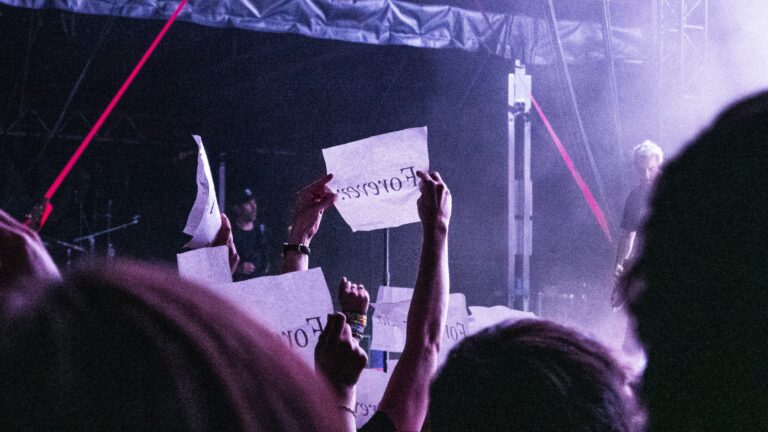
This shift extended into how my relationship with creative hobbies was reshaped. Exposure to live and acoustic performances, particularly through bands, rekindled my interest in playing the guitar and piano. Music, which had always felt too technical and procedural, gradually eroded my love for it throughout the lessons; however, it became expressive and exploratory. I was a perfectionist when it came to playing, but I learned how to have fun with it despite the mistakes. Dance, similarly, became a means of reclaiming confidence and precision. Expression no longer felt separate from identity; it became a way to explore it. Through these practices, I started engaging with my culture not only as a consumer but as a participant.
K-pop also helped me decide what I wanted to do with my career. Although I initially pursued a degree in Chemistry, my sustained engagement with music alongside my marketing jobs while in University led me towards a path in music marketing and journalism. K-pop opened avenues I had not previously considered, including my current role as a content editor for Genius Korea. Through this connection, I have made connections celebrating Korea’s music and culture. However, that connection is not without nuance. My love for my country does not close my eyes to its faults. To engage with culture meaningfully is to understand that it is not singular or perfect – it is layered, complex, and evolving. It holds both pride and contradiction, and, in many ways, K-pop itself reflects that reality.
My journey with this rediscovery differed from the structured learning of my childhood. I owe much thanks to my parents, but I owe the same amount to K-pop as well, which represents far more than a musical genre; it marks a turning point in how I understand my identity, transforming cultural inheritance from something that once felt fragmented into something that feels whole again. I may not be able to express my love for Korea or the complexity of my identity through music like the artists I look up to, but I found another way – through writing and my voice. I am beginning to write not just about my experiences but also about reviews and books inspired by songs that have shaped me, which also deeply carry traces of different experiences, that I hope readers can relate to those who are walking similar paths, carrying similar hopes, and navigating their own versions of this complex journey. Beyond writing, I am reclaiming my voice by creating a podcast that speaks to my experiences, others’ experiences, music, and more.
As K-pop keeps rising, it also gives me a sense of nostalgia I cannot fully explain. It felt like reconnecting with a version of myself that had always existed, just beneath the surface. K-pop did not force me to choose between my cultural heritage and the world around me; instead, it demonstrated that the two can coexist. It entered my life at a moment of uncertainty, when I questioned how much of myself I was allowed to show, and now, it’s something I actively explore, write about, and share.
And now, even the simplest introduction carries new meaning: 안녕하세요, 제 이름은 김주연입니다.
[Annyeonghaseyo, je ileum-eun gimjuyeon-ibnida.]