In My Pop Princess Era: Why FemPop Music Is the Anthem of a New Feminine Rebellion
As Shania Twain once said, Let’s Go Girls.
In a world where the female voice is so often talked over, second-guessed, or minimised for public comfort, the next generation of pop princesses is proving that women are not only being heard, loudly, but that they’re a dominant force in the music industry.
What was once dismissed as “girly” or “bubblegum” is now a cultural revolution wrapped in glitter, synths, and unapologetic honesty. This genre, often referred to as FemPop, isn’t just a subgroup in the music space; it’s a rebellion, a collective reclamation of the voices that have been lost and undervalued in their brightest, boldest forms.
Of course, this rebellion didn’t happen over night. For decades, there have been “controversial” women in the arts who shocked society by simply being themselves. Take 80’s icon Madonna, for example: she was a fierce, unapologetic ingenue whose wild self-expression left entire generations clutching their pearls. She made it clear women could own their sexuality in a public forum and use it as a tool of their own accord, rather than perform for the male gaze. She was mocked, belittled, and, by many (including my own mother), revered. She stood her ground regardless of what society thought, and made art – and moves – that took the world by surprise.
And now? We are living in the renaissance of the Pop Princess.
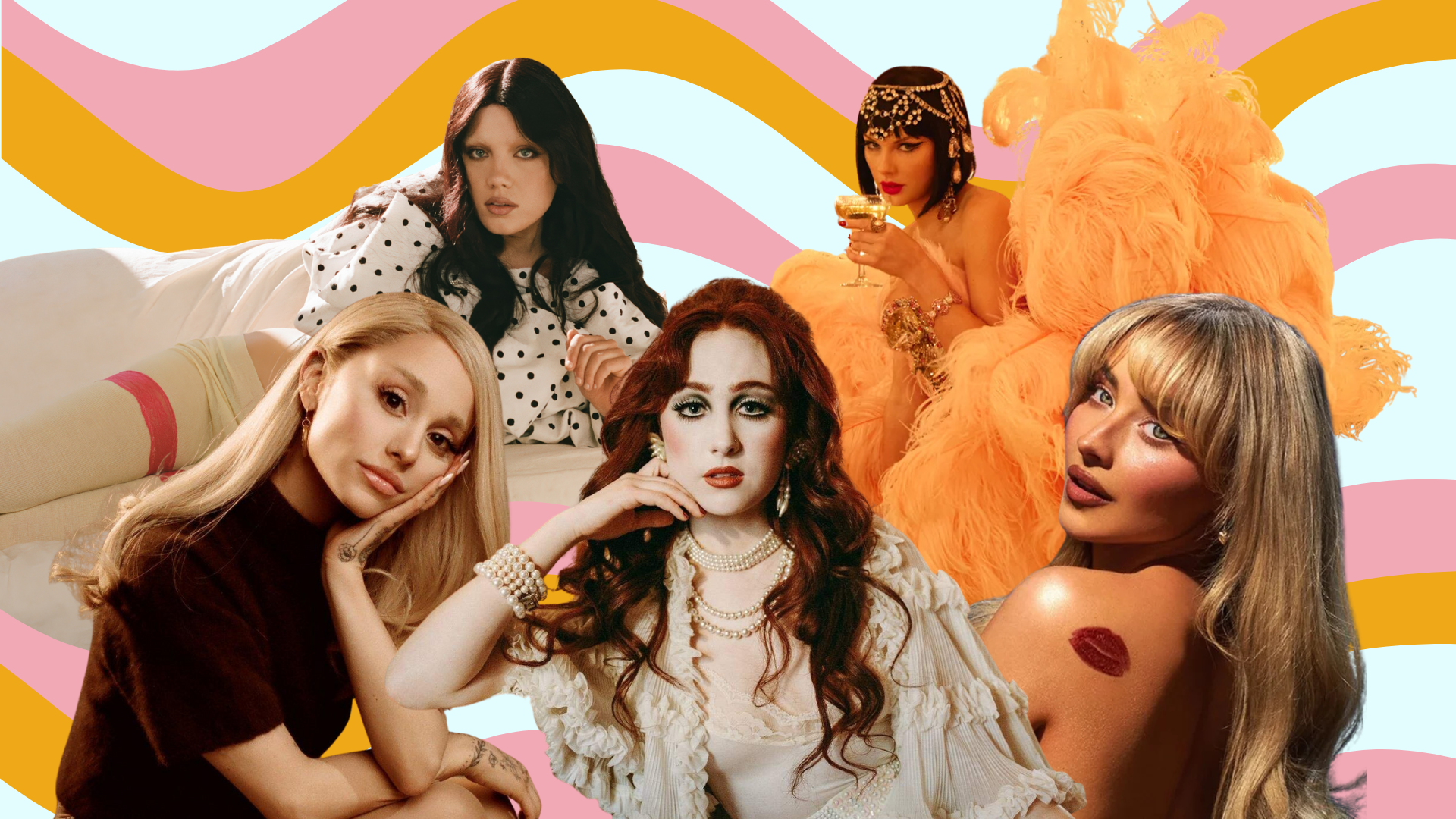
Of course, we cannot talk about modern pop music without discussing Taylor Swift. As Mother Pop herself, Swift has cemented her legacy among music’s elite for her intricate, emotionally resonant storytelling. She wears the label “feminine” without apology, her decades-long discography containing love songs and heartbreak ballads that feel like diary pages shared in secret. Her lyrics nearly read as novels, regaling tales of burnt bridges and boundaries crossed one too many times. The beautiful part of Swift’s storytelling is that, with her music, she’s taking back the narrative. In a world where so often men are the ones who sell their stories to the public in order to earn their favour (often leaving women to burn at the stake), pop’s reigning queen is flipping the script. Taylor Swift has made one thing clear in her artistry: she may be vulnerable, but she is not afraid.
She doesn’t use pseudonyms like many before her were forced to do; she signs her name in swooping, sloping cursive letters brighter than the marquis that holds her name – and breaks worldwide records doing so. That’s why it resonates so deeply with fans across the globe: you can be hurt and vulnerable and still have power. That can be your strength, not your weakness, regardless of what society has to say.
But the magic of the Pop Princess renaissance is that Swift isn’t standing on this stage alone. While she helped build the door, and continues to do so, she’s also left it open behind her, allowing the next generation of powerful pop voices to strut through in rhinestone heels.
These FemPop artists aren’t just tackling boy troubles and bad dates – they are rewriting the rules about what it means to be feminine. Historically, the word lent itself to meekness; you did as you were told, and you tried not to stand out. Now, these women are proving that owning yourself, your emotions, and your sexuality is a power, not a problem – and that the stigma behind it all is so overrated.
In an era that loves to shame women for enjoying themselves, Sabrina Carpenter has become pop’s patron saint of feminine fun. Fun, flirty, and fiercely honest (and at times, a bit unserious), her artistry has drawn criticism far and wide for being “too much,” a crime in a culture which values the invisibility of honest female emotion.
Carpenter removes the stigma around female sexuality not through shock value, but with the bubbly, bright manner in which she shares it. Songs like Nonsense and Espresso, two of her biggest, most-viral hits, don’t ask to be taken seriously; instead, they invite you to sing along, offering a flirty nod and tongue-in-cheek innuendos about what’s going on between the sheets, all while you’re out on the dance floor.
While Carpenter often receives criticism for being seen by the wrong crowd as a “bimbo,” she flips the narrative on its head: what if women can be fun, flirty, playful, and powerful, all at once? What if we can create art that serves a purpose, is relatable, and also is simply a cheeky portrayal of young adult life? What happened to pure, unadulterated fun? Her confidence is contagious, and young women are taking note: apologising for sexuality is exhausting, and we’re done apologising for wanting pleasure instead of perfection.
If Sabrina Carpenter is the glitter, then Chappell Roan is the glowing subway sign leading fans into a world where gender rules are broken, and that love, in its purest forms, is embraced with open arms. Camp culture incarnate, Roan leans into all aspects of herself: queer, emotional, bold, daring, flirty, and brutally honest. She’s not just a performer, she’s a force of nature in drag and decadence, using her powers for political change and increasing awareness of societal issues. She’s not afraid to take up space, loudly, and rebel from the norm of what is “expected” of women. Roan has a deep understanding at a young age of what so few are able to comprehend: women/members of the LGBTQ+ community are not meant to be bite-sized and sanitised for societal consumption, they are meant to be heard – loudly. We are not meant to simply be allowed in rooms, we are meant to break down the doors that keep us out of them. We are allowed to be sexual, radical, loud, crazy, and, most of all, present.
Roan isn’t what the music scene expected, a twenty-something in wigs spanning the lengths of a wedding train or wearing thongs on-stage, but she’s exactly what the world needed: someone who is willing to use their voice for powerhouse performances and pushing forth change.
While Sabrina brings playfulness and Chappell brings performance, Gracie Abrams brings quiet confidence. Her power lies not in theatricality, but in the kind of emotional honesty that feels like a whisper you somehow hear across a crowded room. With Abrams, rebellion doesn’t always have to be loud; it can be soft, unsteady, or whispered through tears.
Her music doesn’t lean into bubblegum pop or bright flashing lights; instead, Abrams has quietly curated a world all her own. Albums like The Secret of Us or Good Riddance allow fans to hear that even whispered words can be powerful, and that speaking your truth is always the right move. In a world where emotional restraint is rewarded, Abrams encourages young women to say the hard thing, admit the hurt, and mine their own emotional worlds for honesty and power.
FemPop is inherently rebellious; these women are paving the way for generations to come with their refusal to shrink at the first signs of scrutiny. They are holding their own, their collective power lying in their differences; whether playful, political, flirty, or fearless, one common goal remains: giving femininity, in all forms, a stage on which to shine. But more importantly, they are teaching the world that femininity itself is not something to outgrow or apologize for; it’s something to revel in. Their music is a declaration that girlhood, womanhood, queerness, softness, rage, romance, sexuality, heartbreak, and joy are all worthy of volume. They’re reshaping the landscape of pop culture not by abandoning femininity, but by elevating it into an unstoppable force.
This new era of pop princesses isn’t about crowns or chart positions. It’s about reclamation. It’s about daughters watching their mothers dance again. It’s about queer kids seeing themselves reflected in glitter and neon. It’s about women rediscovering the power of taking up space: too loudly, too boldly, too emotionally, too beautifully.
FemPop isn’t just a genre; it’s a cultural shift. A modern feminine rebellion with a soundtrack. And thanks to artists like Taylor, Sabrina, Chappell, and Gracie, that rebellion is only getting louder.
So, as Shania said: Let’s go girls.
Because we’re not just entering our Pop Princess Era – we’re living it.