Since When Did a World Tour Mean That Fans Do The Touring?
It’s safe to say the touring landscape has changed beyond recognition in recent years.
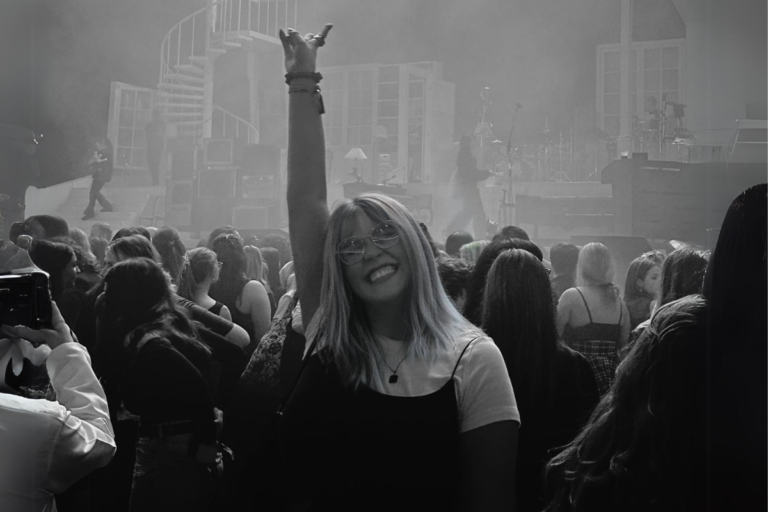
Being a fangirl used to mean desperately hoping that your favourite artist was coming to your closest city, begging your parents to buy you a ticket as a Christmas or birthday present, and then enduring the year-long build-up to that one magical evening. Euphoria to be among your people, seeing your favourite band in real life, then you’d drive off home to share the evening’s wonders on Twitter and go back to school or work the next morning in a glowing haze only live music could put you in.
The touring landscape has shifted dramatically, and fans now bear the economic and logistical burden that once fell to artists. With residencies, soaring ticket prices, and artists building schedules around major festivals, attending live shows often requires fans to travel long distances at significant personal expense. This shift is especially problematic in a time of political turmoil and a global cost-of-living crisis, when people are leaning on music and art more than ever for some much-needed solace.
Like many other challenges, you could argue that this began with COVID and the lockdown that shook the music industry beyond recognition.
After suspending live music entirely for a number of troubled years, local venues were closing at an alarming rate, taking the brunt of a financial hit that only the larger, deeply established institutions could endure. The years that followed a tentative industry revival sharpened concertgoers’ eyes to the rising cost of tickets. A pandemic-induced financial deficit that had to be accounted for somehow inevitably became the consumer’s problem. With pent-up lockdown energy and a desire to save the venues and, to some extent, smaller artists they loved, the fans showed up and tolerated the gradual rise in admission fees.
However, in many ways, these changes were so minor compared to the path that large artists were about to take. While the standard world tour itinerary involved travelling to all the UK’s big cities, at least the capital cities of most European countries, an extensive list of dates across America, with additional dates in Latin America, Australia and beyond, there’s been a shift towards established artists opting for at best one city per country, or on the more extreme end a single residency on the opposite side of the world to you.
Residencies are not a new concept. These are often the only way to see artists who have reached the living legend status, often older, who still want to perform for their loyal fanbase, but don’t have the capacity, health-wise, to tour in the conventional sense anymore. However, this used to be common practice only for the biggest of the biggest, often with older fanbases because of their age and extensive time in the industry years prior, whose fans had the time and financial ability to plan a vacation around seeing their favourite artist of all time for this once-in-a-lifetime opportunity. Not the standard for artists still in the first decade of their career, or just beyond, by any stretch.
Touring presents a unique set of challenges and inevitably takes a toll on an artist’s mental and physical health. Looking back on the hectic schedules of bands in the early 2010’s, a shift was undeniably needed to allow artists a more manageable routine around live shows, rather than pushing them to burn out, as we saw with so many of the artists we loved and supported in our teens. For many, this simply meant allowing more off days on the road, or more downtime between album and touring cycles to allow some semblance of normal life to return. To some extent, pushing for residencies and allowing artists to settle into a venue for a period of time can be seen as a move to ensure their own well-being while still being able to put on the live shows that their audiences crave.
Yet, the power dynamic at play here is problematic. Artists able to consider residencies have significant resources and an ability to absorb touring costs with minimal implications. Those who profit most are best equipped to handle these expenses, while fans shoulder substantial burdens. Fundamentally, this results in an accessibility challenge for so many. While concert tourism has been a growing phenomenon for years, as people seek ways to extend the experience of live music into a multi-day adventure, the motivation has shifted. Before, this travel was out of joy and connection, not necessity. Meeting fans from all over your country or even further afield, exploring different cities on weekend breaks with a concert as the focal point, used to be a fun little sidequest, not the only way to experience your favourite music in person.
The frustration born from these collective changes justifiably comes from so many different avenues. For an artist you love with an unpredictable tour schedule, it begins to feel more like an obligation than a fleeting joy to attend a concert, given the sheer effort and number of hurdles involved. What used to be a few-hour drive to your nearest city for a fun evening now becomes a mental and logistical effort of booking hotels, transport, days off of work, IF you survive the Ticketmaster war and have the privilege of spending hundreds of pounds on a ticket. None of these steps are passive, the logistics of touring around real-life commitments are a considerable effort to manage, and it all comes with an ever-increasing financial dent.
For many, obstacles now outweigh the reward. In a tough global economy, taking several days holiday and spending significant amounts just to see a concert is a completely unfeasible endeavour. The personal cost is too high compared to the reward of a few hours of live music.
The toll this takes on fanbases as a whole can be detrimental. Artists only reach the fame and demand needed to put on stadium-level residencies because of the fanbase that has been with them from the beginning and built them from the ground up. It’s saddening to see that fans who have been loyal from the very beginning of an artist’s career are being priced out of supporting them on tour, or putting themselves in incredibly challenging financial situations to make it happen. Musicians at this point in their career know they have a fanbase invested and large enough to follow them to whatever corner of the globe necessary, but that doesn’t mean they should.
A key distinction here is that this has always been the case for smaller artists who are still establishing themselves. They might not always come to your city or your country, because it is probably not economically feasible for them. Eyebrows are raised when huge artists, whose pockets are inevitably well lined from the now inflated concert prices, turn at the first opportunity to do only a handful of venues around the world. At best, it’s to protect their well-being and the sustainability of touring in years to come. At worst, it’s exploitative of their loyal fans and nothing more than greed, with no concern for fans having to sacrifice so much personally to still attend shows and go to great lengths to support them.
While changes to the industry as a whole have been long overdue to protect artists and their touring staff alike, it is important to recognise possible alternatives that others have been implementing in recent years. There are ways around this that so many artists have started moving towards, without detrimentally impacting fans and forcing the touring responsibilities upon them. No one should be putting themselves under significant financial strain just for the opportunity to see their favourite artist live in concert, but that is the reality we find ourselves in in 2026, out of a necessity to stay loyal and support these now huge artists that we’ve watched and helped develop from their humble beginnings.
The global touring landscape is evolving in so many ways. There have been positive strides towards making touring more environmentally friendly, stretching out schedules to allow artists more downtime on the road, and towards a stronger appreciation of the impact of the community built at shows. But the contrary to that is the move towards residencies and single-city tours. ‘World Tour’ as a concept has been used more and more loosely over the past few years, in a shift that seems to be spreading among the industry’s biggest names. A move ultimately only alienating the backbone of the music industry, the fans.
As much discourse as there is online about the rising ticket costs and dynamic pricing, this is only half of the issue. Fans being expected to swallow the cost of inflated ticket prices, along with the cost of touring itself is a move out of live music in the way we have always known it. Although this may only currently apply to big names, it represents a shift that only a few years ago would have been unheard of. A further step down the path of music being inaccessible to the average person.
Perhaps it is time for a bigger conversation around how the industry can reimagine touring in the modern era, without forcing fans themselves to do the touring. A midground between managing artist wellbeing while protecting accessibility, and the loyalty and community that made live music so magical to all of us in the first place.