What The Soft Life Version of Stan Culture Looks Like
For decades, stan culture has been the epicentre where fans come together to support their favourite famous people.
This used to be in-person, at concerts, out in public, and at premieres, but fandom culture has changed.
Fans still show up for their favourites in these same places, but the internet has changed how fans support them. Stan Twitter, which emerged in the 2010s, became the playground for ‘obsessive’ fans to engage in a subculture where they’d discuss their favourites, post content about them, and make mutuals, a.k.a. internet friends. Really, this was the birth of online stan culture and the beginning of a chaotic form of fandom.
On the internet in the early to mid-2010s, it was seen as cool and normal to be so in-tune with the people or bands that you were a fan of. The markers of a good fan were people who knew everything about the person they were stanning. People would live tweet award shows, concerts, and some were glued to update accounts to find out when and where their ‘favs’ were in real-time. Even semi-internet famous people were dubbed as self-confessed stalkers; people like Stalker Sarah made a living from it!
While it may feel crazy to comprehend, levels of parasocial behaviour rose increasingly in the 2010s. However, as people became aware of the effects of social media and fan behaviour on the very people they were supporting, a shift occurred.
A Change in Stan Culture
Now in the mid-2020s, attitudes have changed. Fans on Twitter are older and more understanding. Fandom is no longer dominated by tweens and teenagers; young and older adults are also immersed in fandom culture, as it’s become more accepted by society. With this change, what’s become acceptable online has also shifted.
Celebrities themselves have become outspoken about how some fans go too far. Chappell Roan is a key example of this, having been very vocal about her boundaries with fans and what is and isn’t acceptable if they approach her in a public setting.
If you act parasocial now, you’re seen as a pariah in the fandom. It’s frowned upon to want to know every little thing about your favourite artists and to discuss intimate and personal details of their lives. This calmer version of fandom is called ‘soft life’ stan culture.
Sit back, relax, and join us as we describe what soft life stan culture is and how it is being redefined by a specific group of fans.
What Is Soft Life Stan Culture?
The term ‘soft life’ became trendy about three years ago among social media users, mainly women, who had started to reject the rise and grind and the ridiculous hustle culture that plagued the 2010s. Instead, the girlies started to prioritise taking a slower and simpler approach to their lives, focusing on emotional and physical wellbeing and personal betterment. In a nutshell, less is more.
But how can you apply this to stan culture? Well, with many fans rejecting overinvestment in their favs’ lives, many have adapted to the social change. What you have as a result is a newer and laxer version of fandom that promotes responsibly supporting your favs, without being consumed by them and their lives.
Who’s Championed This New Movement of Fandom?
There’s a debate around who has championed this new version of fandom. We’d argue part of the cultural shift is reflected in older fans who’ve joined fandoms in recent years but remain removed enough from the conversation to lead their own lives. Think of it like this: The more life experience you have, the more your interests change, and so do your priorities. Someone involved in fandom who’s older than a teenager is likely to have less free time to spend keeping up with famous people and their whereabouts.
Compare that to an excited teenager, who may be looking for a community to belong to, to support her fav, so she becomes immersed in the world of like-minded fans of a similar age. Still, many teenagers are also promoting a healthier version of stan culture. And one thing you will notice: female pop music fans are at the centre of it.
Female Pop Fans Have Been Stigmatised for Decades
Unfortunately, misogyny runs rampant in the conversation of stan culture. Never mind being made fun of for being a frugal fan, what about being made fun of just for being a woman who loves music? Female pop fans were called insane for their reactions to pop stars and their music.
This doesn’t start or end with Swifties. Throwing it back to the 1960s when Beatlemania transformed the world, female pop music fans were heavily ridiculed by the media and men. Excited screaming girls were labelled as hysterical and criticised for loving a band that altered the world of music. CBS News called Beatlemania an “epidemic” in their coverage.
After The Beatles, the labels shifted to other female pop fans, and as recently as the 2010s, women were still teased for simply liking music. One Direction fans received the same heat, being criticised for liking music that wasn’t ‘real music’, until one day, the pop girlies said they’d had enough of the outside noise.
What Does Soft Life Stan Culture Look Like for Pop Fangirls?
We love the move towards a serene version of fandom. I do sometimes miss the iconic days of diabolical Stan Twitter, but the new pop girl-led phenomenon is comforting to us fandom veterans. But the question remains …what does that look like?
No constant online presence
Female pop fans are not online all day, every day now. Even though it’s tempting to stay online to see if there are new details of AG8 or Olivia Rodrigo’s third album, the girls are resisting.
For their own benefit, they are pushing back against the pressure to be a ‘good’ fan, which once meant knowing everything about their fav and being active all the time. The chilled approach to maintaining an online fan account means missing a livestream or announcement isn’t the end of the world, there’s less urgency, and a lower chance of burnout. Being online all the time and living your life for someone else is emotionally exhausting. That’s no longer the goal!
Female pop fans are also practicing mindful social media usage, which you can do by limiting your screen time and using an app to lock your phone so when you reach for it, you can’t use it.
Boundaries are the new aesthetic
Like Chappell Roan, who has set her boundaries with fans and the media, so have fans. It’s become cool for fans to respect celebrities’ boundaries and not encourage speculation about their life. The markers of being a ‘good fan’ are gone.
What’s replacing it is the soft parasocial relationship where fans maintain an emotional connection with their favourite artist, from a distance. For pop fans, they are learning to understand that the relationships are one-sided and that the artists provide the art, while they consume and enjoy it in controlled settings. Fans can do this by enjoying the music at home or attending the occasional concert without higher expectations of meeting the popstar or being recognised by them.
Prioritising self-care at concerts
Pop concerts are always busy (just look at The Eras Tour), and female pop fans are becoming the main characters, in the best way possible, by practicing self-care at concerts. But what does “self-care” mean?
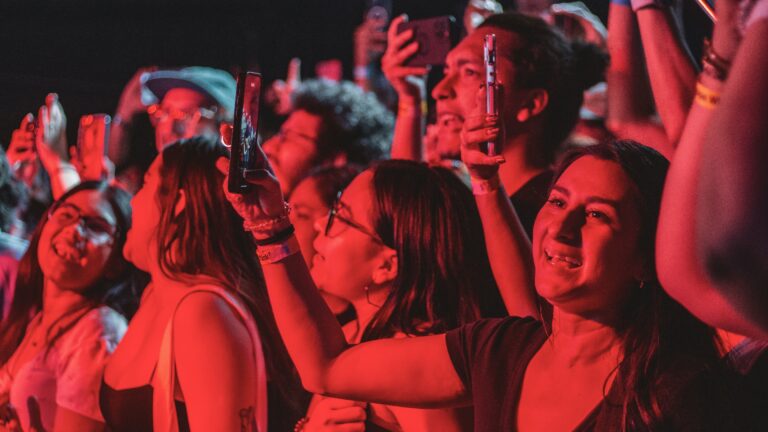
Soft life fans are not filming everything at concerts and feeling pressured to document every song. Instead, they’re living in the moment, taking intentional clips but focusing on enjoying the music and the atmosphere rather than thinking about what they’re going to post.
Awareness of concert etiquette has increased post-Covid, because concert etiquette got very bad for a hot minute. Female pop fans are girls’ girls and respect personal space, not shoving in concerts, or moving obnoxiously in the pit. With that, there is also an unspoken understanding that pop fans are not the main characters at concerts. Just imagine a super zen pop concert, with a side of serving.
Female pop fans welcome self-expression in dancing, dressing, and singing, but also ask other fans to understand the concert isn’t a solo experience. So, there’s no blocking views, scream-singing, or being unaware of personal space. After all, every fangirl at the concert is looking to enjoy the show, and they can’t if some fans are behaving badly.
The way fans are approaching concerts is also changing. Fewer female pop fans are willing to camp overnight for a barricade spot, sacrificing basic needs like food, water, and rest in the process. Fans are also setting personal boundaries and knowing when to take a toilet break and preserving their energy and voices for the moments that count. Self-care is personalised when it comes to female pop fans, but respect, boundaries, and awareness seem to be what they’re encouraging.
Aesthetics have become more subtle
A less noticeable change among female pop fans is the transition to more subtle aesthetics. This doesn’t mean the girls don’t dress up (The Eras Tour was like a fashion show). It means fans are focused on curating fashion that interprets the artist’s aesthetic, but doesn’t copy it.
Merchandise is also something less important for fans now. Pop fans don’t yearn for graphic tees with their fav’s name on as much anymore. Rather than wearing overpriced official merch, pop fans are also representing their favs through their own creations.
You don’t have to be covered head to toe in official Swiftie or Arianator merch to be considered a fan these days. The pressure on the pop fan’s bank account, and online, is a thing of the past.
Is Soft Life Stan Culture Here to Stay?
It goes without saying that soft life stan culture is the best thing to happen to fandom, probably since the internet itself. But is this version of fandom staying?
There is no reason why it shouldn’t stay. As we become increasingly digitally literate, we realise how taxing it can be to be a fan of someone. Sometimes it can feel like a full-time job; constant refreshing, posting, and engaging with other fans can be exhausting. Even in 2026, there is something a bit sinister about spending more time and emotions invested in someone else’s life and art rather than your own.
What female pop fans are teaching us is balance. You can still be a huge pop girl without being involved in every update and discourse.
One thing is clear: pop music is here to stay. We’re on the horizon of some huge album releases in the pop sphere, so as long as pop music continues to be made, fans will continue to exist and encourage a better version of fandom.