
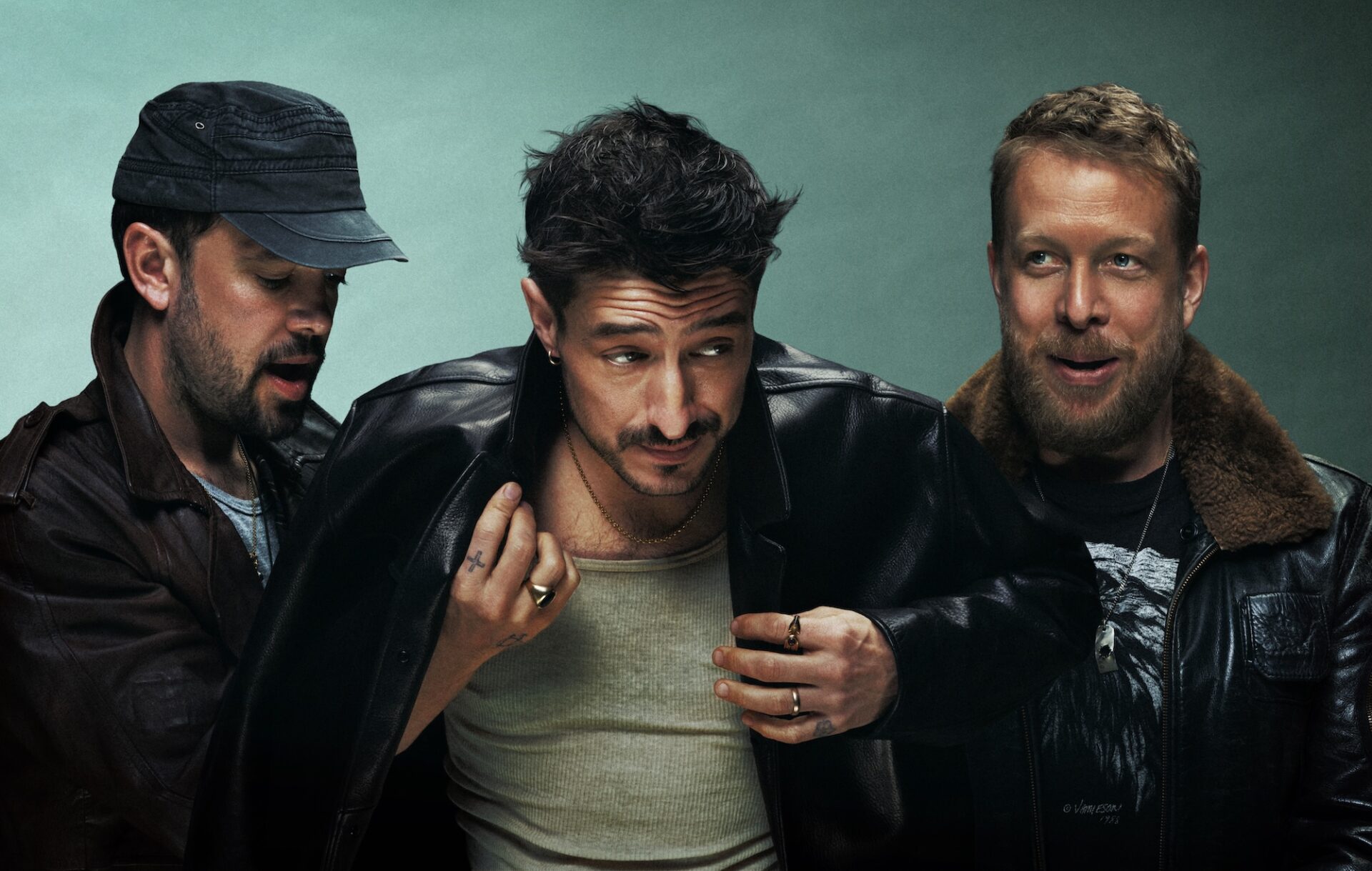
Mumford & Sons Soar Once More on Prizefighter


Mumford & Sons deliver a confident sixth record that balances seasoned reflection with renewed creative fire.
Less than a year since the release of their long-awaited fifth album, Rushmere, Mumford & Sons return with their sixth studio effort, Prizefighter – and if Rushmere was a reintroduction, this feels like a reclamation. The English folk-rock band delivers a vulnerable yet buoyant homecoming, stacked with a star-studded guest list: Hozier, Gracie Abrams, and Gigi Perez all make appearances. Behind the scenes, the credits read like a major festival lineup.
The album is co-produced by Aaron Dessner of The National, with writing contributions from Brandi Carlile, Finneas, and Bon Iver, to name just a few. It’s impressive – but never overshadows the band’s core identity.
Across 14 tracks, Prizefighter oscillates between uplift and heartbreak, all anchored by Marcus Mumford’s instantly recognisable voice – rich, ragged, and still capable of sounding like it might crack open mid-chorus. And yes, they still play the banjo. In fact, there’s a song dedicated to the instrument. But this isn’t 2009 – the banjo appears less as a nostalgic remark and more as a textural choice, woven into arrangements to make them feel broader and more expansive.
The result is an album that feels like the band has come home – not by recreating the past, but by rediscovering the joy that made their early records soar. Earlier this year, 39-year-old Mumford told The Times the band had “found the fun again” – and on Prizefighter we can hear it.
Album opener Here, featuring Chris Stapleton, welcomes listeners with a country-leaning guitar and a slow-burning sense of confession. The two vocalists lean into regret, laying themselves bare: “I had lies like you wouldn’t believe / Brought to my knees”. It’s weathered, grown-up heartbreak.
Lead single Rubber Band Man pairs the band with Irish singer Hozier, who fits so comfortably into the arrangement that it almost feels overdue. The voices blend beautifully as they reminisce over shared memories, the chorus swelling into a harmonised ache: “I know you by your heart / And I will call you by your name”. The song captures the uniquely devastating intimacy of knowing someone deeply – even after they’ve changed.
The Banjo Song – surprisingly restrained in its twang – recalls earlier singles in spirit if not in sound. Mumford pleads openly, “when you call, when you fall / And you need someone, I could be someone”. The vulnerability is earnest to the point of near melodrama, which has always been the band’s superpower. Similar devotion carries into banjo-led Run Together, where lines like “When we’re apart, we fall apart / I am yours, and yours, and ever” lean fully into “sweep you off your feet” type of love.
Conversation with My Son (Gangsters & Angels) offers a gorgeous acoustic guitar solo, framing lyrics about enduring love and parental support with tenderness. Meanwhile, the solemnness of Alleycat and the title track, Prizefighter, slows the album’s momentum. The latter is particularly striking, unfolding like a short story. “But ghosts cannot apologise for the hearts they broke / Oh, is it my heart that’s still broke?”, Mumford sings, grappling with memory and accountability equally.
Begin Again jolts the record back to life with a strain of alt-rock that feels effortless to the band, propelling listeners into the album’s second half. Next, Icarus, with Gigi Perez, stands out as a clear highlight. Perez’s powerhouse vocals demand attention, especially in the song’s climax opposite Mumford. Layered backing vocals, subtle percussion, and driving bassline give the track a sense of lift.
Stay barrels forward with a more straightforward rock edge, emphasizing repetition and volume, while Badlands softens the palette. Abrams’ whisper-like vocals add a fragile intimacy, as if two friends are confiding in each other. Finally, the album closes with Clover, a poetic, lullaby-like finale. Mumford’s voice drifts over a gentle piano melody, ending the record not with a bang, but with a steady exhale.
Prizefighter may not catch the ears of new fans or convert the skeptics. Instead, it feels made for the fans who have been here since the barn-stomping days over a decade ago.
There is maturity here, but also flashes of the unfiltered earnestness that once had entire festival crowds shouting back every word. The band has doubled down on what they’ve always done best – raw, unfiltered confessions wrapped in soaring harmonies – and in doing so, proved they haven’t just returned to their formula, they’ve perfected it.