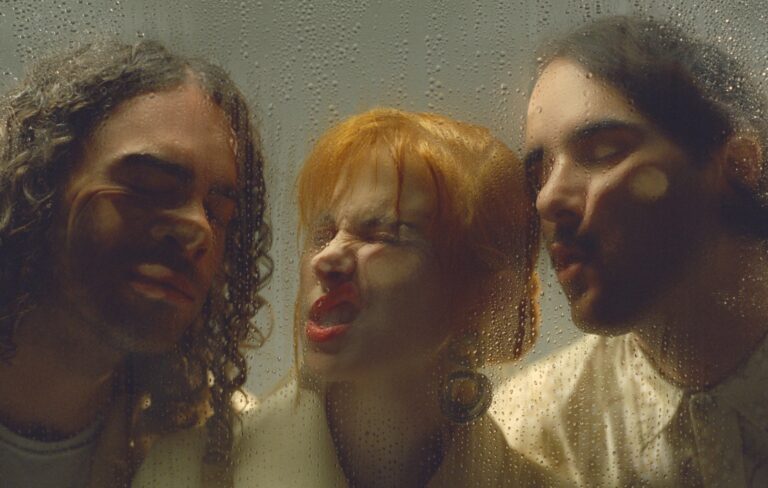

We Can See The Bright Future for Leith Ross

It’s been three years since Leith Ross’ We’ll Never Have Sex introduced their earnest, emotional music to a global audience.
This propelled the Winnipeg-based artist to indie stardom and paved the way for their debut album, To Learn in 2023. But in 2025, Leith Ross is still writing heartfelt musings on life and love, and is still sharing these lyrics to TikTok, where the comment sections are filled with fans understandably losing their mind over the genius of their lyrics. Their newest project, I Can See The Future, is both a continuation of the kinds of heartfelt songs Leith is known and loved for and an evolution of their style, reflecting the growth that comes with growing older.
This sophomore album was born out of feelings of vulnerability and sincerity, of grief and hope.
Leith describes the title track, I Can See The Future, as being about “my understanding of the world and my place in it.” It’s the “beating heart” of the album, as Leith describes it, and the song that is most special to them emotionally. It’s also the only song on the album that isn’t written from Leith’s perspective, instead taking on the point of view of someone living in the future world that we are fighting for now. Overall, it’s about the belief in a better future—even if we aren’t the ones who are around to see that future. This hopefulness is what Leith hopes listeners will take from the project.
Their forthcoming album opens with Grieving, which happens to be the song Leith wrote first for this project, as well as a major theme on the album. They wrote this opening track while grieving their grandfather many years ago. “Experiencing a large grief for the first time in my life was something that changed me artistically and as a person,” Leith shared. This grief, while obviously devastating, also inspired them to think about the ways they were both living and loving. Grieving was a jumping-off point for many of the album’s greater concepts, containing themes that reverberate throughout the rest of the project.
Another major theme on the album is community, a concept best encompassed by the song Stay. A track that’s almost like being hugged by an old friend, thinking about the concept Leith writes about on the song “has encouraged [them to be a more active community member and a more active friend.” At a time when individuality seems to be the way of the world for so many, Leith finds joy and connection in putting their effort into seeking community, a pursuit that shines through in the overall message of this album.
When it comes to how the album came together, Leith’s songwriting process might not be what you’d expect. Leith says they’ve never been someone who decides to just sit down and write a song out of nowhere—rather, they almost exclusively write music when they’re in the middle of a feeling so intense they can’t not sit down to write. When asked which songs from the new record were the most emotional to write, Leith shared that Grieving, I Can See The Future, I Will, and Alone stand out as the most visceral in the songwriting process.
When compared to their first project To Learn, I Can See The Future contains similar notes of nostalgia, but comes from an expanded understanding of their place in the world. While I Can See The Future is also an album about getting older, it strikes a somewhat different, more mature tone. While To Learn was written during the transformative period of becoming an adult (and the subsequent development of their prefrontal cortex), Leith calls I Can See The Future the “older sibling” of To Learn. To Learn was a coming-of-age project, but so is I Can See The Future, Leith explains. “I’m never gonna not write a coming of age record,” Leith says, “whether that age be twenty-seven, thirty-five, fifty-two… I’m always gonna be writing about some coming of age.”
In tandem with the idea of coming of age, I Can See The Future also explores questions like “Who am I?” and “What do I mean to everything?” Big questions to tackle, yes, but for someone like Leith—whose father taught philosophy and ethics, and was constantly interrogating similarly large questions—it feels like a challenge worth taking on. “Writing music is very similar to trying to answer a philosophical question,” Leith mused, explaining that writing music is like trying to get to answer or get to the bottom of a feeling, which feels similar to philosophy—even if it sometimes just brings up more questions in the process. “I’ve always liked asking questions I’ll never have answers to… it feels like such a human endeavor,” commented Leith.

On a more technical level, the album is also a step up in terms of production. Leith shared that they developed more language, skills, and confidence during the recording and production on the album. Fans of Leith’s first project will be happy to hear that in some ways it is still sonically similar, but in some ways it’s different, influenced by access to more resources and opportunities in the recording process.
Leith’s identity as a queer artist also informs their songwriting in the sense that it’s not just an identity—it’s a way of seeing the world. Leith describes their queerness as “a way of living that allows [me] to question everything, and not just accept things for the way that they are,” and that worldview inherently comes through in their music Queerness allows Leith to operate outside the typical structure of the world we’re often forced to live in, to look at things in a different way and to view their relationships as revolutionary.
With this new album, Leith is also preparing to head out on their fall tour, where they’ll play to intimate rooms of fans all around North America. They hope their tour becomes a communal experience where audience members can connect and experience moments of togetherness. One of the songs from their new album that Leith is most excited to play on tour is Alone, a song about how important it is to be a friend to yourself. After all, “no person you’ve ever known or ever will know… will ever know every version of you, but yourself,” Leith shared. “When you have a deep understanding that you’re the only person who will ever truly know you, it feels so good. It feels so deep and important,” and for that reason, they loved writing Alone. They describe the song sonically as something that starts acoustic, then “explodes into this big, beautiful, all-overwhelming feeling,” expressing their anticipation to experience this cathartic moment in a room full of fans.
Point of View is also a song they’re looking forward to playing, a self-described “feel-good love song.” The song, written from the feeling of wondering, “Are all my love songs all about me?” is one that Leith hopes will provide a touching moment for audience members. “I am a little bit obsessive with trying to understand any kind of relationship,” Leith shared about the thought process behind that song—a sentiment informing the way they write in general.
I Can See The Future officially releases 19 September. Where should listeners be when they listen to the album for the first time?
Leith imagines the listener riding on a bike by themselves with a cool breeze on their face, “looking back at [their] whole life and considering the entire world.” Or maybe they’re driving to a new place or back to some old place they haven’t returned to for a while – anywhere that invites the listener to feel that “fullness of nostalgia” permeating the album.