
We All Grew Up on Wattpad — So Why Are We Still Obsessed with Fictional Men?

The evolution of Wattpad enthusiasts into full-fledged book girlies truly needs to be studied.
Whether your first romance read was a Harry Styles fanfiction as a pre-teen or you’re in your twenties just now learning your forbidden affection from your enemies to lovers book, literature has always been a classroom for how we think about love. But why do we still spend so much time thinking about fictional men?
For many of us, Wattpad was where it all began. Teenage us, rushing home from school to read the latest update on a fanfic about our favourite musician, it was practically a rite of passage for any fangirl. A coming-of-age ritual defined by those orange headers, tantalizing updates, and that consuming anticipation of finding out what our fictional boyfriend was up to that week.
A cornerstone of the Wattpad era was its deep connection to early 2010s fandom culture. The biggest artists on the planet became the centre of endless ‘y/n’ stories, ships between band members, and reimagined versions of celebrities who felt more accessible in fiction than they ever could in reality. No fandom embodied this more than One Direction. Entire communities formed around these stories, refreshing chapters late into the night, and living for those overly dramatic cliffhangers. Their cultural impact still lingers today, where you can trace their fingerprints in the romance novels, films, and shows that continue to dominate modern media.
Perhaps the most iconic example of a fanfic breaking containment was After, the infamous Harry Styles–inspired story by Anna Todd. Originally published on Wattpad, it was picked up as a book series in 2014 and adapted into a five-part film franchise beginning in 2019. The story follows Hardin Scott, a brooding, Harry-adjacent character in his iconic black skinny jeans and Chelsea boots, who meets Tessa at college. What begins as a manipulative bet turns into a consumingly obsessive love story. Full of problematic traits and toxic tendencies? Absolutely. But After’s cult following proved that Wattpad’s influence had jumped from teenage bedrooms to studio sound stages. For better or worse, fanfiction was finding home with a much wider audience.
More recently, The Idea of You tapped into a similar fascination, with another Harry-esque figure at its core. Robinne Lee’s 2017 novel follows Solène, a 40-year-old art gallery owner and mother who falls for Hayes Campbell, the young frontman of a world-dominating boyband called August Moon. Their relationship becomes strained by age, fame, and motherhood, exploring the real cost of loving someone adored by millions. Though Lee insists it wasn’t directly inspired by Styles, the parallels are undeniable, and Nicholas Galitzine’s tattooed portrayal in the 2024 film adaptation only fuels this speculation. Unlike the novel’s heartbreaking ending, the screen offers a more hopeful reunion years later, letting audiences cling to the fantasy of a happily ever after rather than watching their love fade into a bittersweet memory.
Although proportionally there seem to be more Styles fics than any others that have made it onto the big screen, he’s far from the only imaginary boyfriend born from fanfiction. Some of the biggest franchises began as fanfiction, Fifty Shades of Grey being the most notable example. Christian Grey, in this case, represented the desires that fan writers were unafraid to explore. The original writing from E.L James based on the supernatural relationship between Twilight’s Edward and Bella, was rewritten into the characters of Christian and Anastasia. Their relationship went on to find huge success after being published into a best-selling series, and later a franchise of hit films.
So why do fictional men captivate us so deeply? Part of the answer lies in safety and control. A fictional love interest can be moulded, reimagined, or rewritten to suit our personal desires. Real love can be messy, unpredictable, even frightening on first attempt, but on Wattpad, love was ours to design. Fiction provided a controlled escape, a romantic simulation where heartbreak was optional and devotion was guaranteed. Your fictional man was always there, both in your imagination and on the page, whenever you needed that familiar hit of love.
Yet this emotional sandbox comes with a catch. For many, fanfiction and young adult romances were our first introductions to love, shaping our early understanding of what relationships would and should look like. When toxic or manipulative traits are presented as romantic or redemptive, we can end up rooting for dysfunction. Wattpad didn’t just entertain us, it educated us on what love feels like, looks like, and hurts like. Often penned by teenagers themselves, many of these writers didn’t fully comprehend the power they held in those dimly lit pages. Readers found themselves craving crumbs of affection from tumultuous romantic interests, setting a shaky precedent for what they would later consider acceptable in real relationships.
Fictional men present comfort and escape, especially when written by women. Where love in real life is flawed and unpredictable, these men act as safe projections of every one of our heart’s desires. They’re crafted with intention, often by female writers who know exactly what emotional fulfilment looks and feels like. The beauty of a fictional boyfriend lies not only in his perfection but in the fact that he cannot hurt you. The safety found in men who aren’t real has become a widely sought-after emotion, the feeling of closeness without the emotional risk of real relationships or rejections. For male characters written by women, there’s nuance in every detail, every hope and desire poured into someone we could only dream of encountering in real life.
Never has this been truer than with the recent success of The Summer I Turned Pretty and the internet’s collective crush, Conrad Fisher. Based on Jenny Han’s coming-of-age trilogy, the story follows Belly as she navigates life after suddenly being seen as a woman by those around her. Her lifelong crush on older brother Conrad and new attraction to younger brother Jeremiah all come to a head one summer. While Jeremiah only notices Belly after her physical changes, Conrad has quietly loved her for years. Despite his grief and emotional distance, his fear of losing her finally forces him to reveal his heart. Their happily ever after takes the longest of roads, but throughout Conrad’s quiet devotion makes him the ultimate fictional boyfriend.
An interesting cultural development stemming from this show is the amount of love it’s been receiving from women in their twenties and beyond. Young Adult books are by design intended for a teenage audience, but what seems increasingly common is women of a slightly older demographic revisiting these stories for a bit of comfort, too. They might have been written for teenagers, but perhaps the idea of a simple and wholesome love becomes more necessary and appealing as we get older and lose that rose-tinted vision of what love looks and feels like. Love as an adult can be complicated by obligations not present in early life, so it seems fitting to desire to go back to a simpler time, where true love and the intensity of those feelings was all that really mattered.
Across its three seasons, the show takes Conrad from a high school teen coping with his mother’s illness to a young man who finds healing, goes to therapy, studies medicine, and takes care of his family. Even in the subtleties of his mannerisms, his softer wardrobe, his cooking (even if it’s just grilled chicken), we see him grow into husband material. So many have fallen for this fictional boyfriend because of the thoughtfulness of his love. The way he looks at Belly, how he quietly cares for her without expecting recognition, and how he sacrifices his own happiness for years to protect what he thinks she wants. It’s a yearning unlike any other, no doubt about to reach a new level in the still-in-development movie to wrap up the series.
Every character has flaws and arcs that need to unfold for a reader to feel fulfilled at the end of a story, that’s part of the coming-of-age appeal. But characters like those from The Summer I Turned Pretty show the power writers hold when creating love interests for young and impressionable women. They offer not just fantasy, but a blueprint for what emotional maturity might look like. Written by a woman to fulfil the ideals of a devoted partner, Conrad sets a standard for viewers, reminding them to accept nothing less than their own real-life Conrad Fisher (by the end of season 3, at least). Unapologetic in his feelings, allowing his love to grow without him, until their time is right to come back together and fully commit to each other, while still living full lives independently.
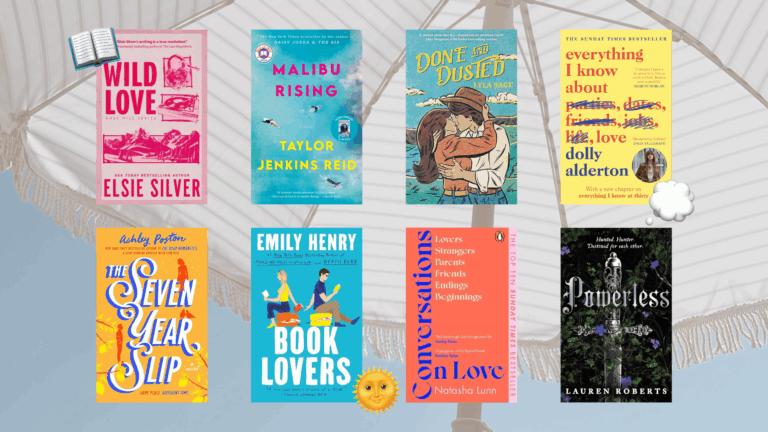
What began as endless hours on Wattpad evolved into a full-blown cultural shift, from reading fanfics and young adult novels to the modern BookTok girlie era. It’s fascinating to see how those same instincts for yearning, devotion, and slow-burn storytelling have migrated to new platforms. The obsession has evolved from reading and visualizing to text edits. We no longer just read about fictional men; we watch them in our favourite movies and make memes about them long after the shows end. The yearning that once lived in Wattpad comment sections now thrives in TikTok edits set to Phoebe Bridgers lyrics or The 1975’s saddest tracks.
A generation raised on Wattpad has learned to romanticize through aesthetics, a soft-focus shot of a brooding man, an edit that turns a ten-second glance into a fully developed love story. These digital fantasies hit the same part of our brains that Wattpad once did. The algorithm already knows your type, tortured, soft-spoken, and loyal to a fault. Once it learns the tropes that hook you in, your feed fills with fictional boyfriends to keep your mind occupied. It becomes a fun way to find new shows with new characters while still having an air of familiarity about them.
Wattpad romances do however set some questionable emotional standards, with grand gestures, tortured souls, and unwavering devotion becoming the norm. We were raised on characters who would cross oceans, fight their demons, and still show up at your door in the rain. In real life, that is not always the case. Fictional men are written with purpose. Their flaws are curated to make them redeemable, their pain meaningful. Real men, unfortunately, don’t come with that kind of built-in narrative arc. This creates a quiet tension between what we’ve been taught to expect from literature and what we actually encounter.
The continued appeal of fictional men reflects how reality rarely matches the emotional intensity of fiction. But maybe that’s the point. We’re not necessarily seeking these characters as substitutes for real love, but as emotional touchstones. They represent hope that emotional availability, vulnerability, and devotion can exist in our world. It’s less about expecting real life to match fiction, and more about holding on to the belief that the kind of love we read about is still out there.
For those who were chronically into such fanfictions in the early 2010s, it’s not an isolated experience to revisit the characters and stories that shaped us. Whether you find yourself scrolling Wattpad to relive the chaos of those early fandom years or re-read the novel adaptations that sprang from them, the nostalgia often hits deeper than the original stories themselves. Revisiting fictional men isn’t just about romance, it’s about remembering who we were when we loved them first. These characters represent fragments of our younger selves. The naive belief that love conquers all, the thrill of a new crush, the ache of heartbreak we hadn’t yet lived through. When we re-engage with them, we’re not just yearning for them, we’re yearning for the version of ourselves who felt everything so deeply. Who hadn’t yet experienced their first breakup and still believed so purely in soulmates and forever loves.
The comfort of fictional men might be less about love and more about finding our own identities. They serve as emotional mirrors, reflecting the kind of affection we wished for and the people we hoped to become. Returning to those old stories, even through TikTok edits or fan art, becomes a form of emotional time travel. It’s not just nostalgia, it’s a reclamation of our softness, of idealism, of that fearless belief in love that adulthood tends to harden.
Maybe we never really outgrow our Wattpad era, we just evolve how we express it. The platforms change, the characters change, but the longing stays as strong as it felt as a teenager. Fictional men give us permission to dream about love in its purest form, without rejection, without fear, and without the awkward messiness of real life.
They remind us that love, even when fictional, can still feel real enough to truly move us. To bring us to tears, feel heartbreak through the pages, and fall hopelessly in love despite the odds. They help us practice empathy, explore desire, and understand emotional vulnerability, all through the safe lens of our imagination. Perhaps that’s why we’ll never stop being obsessed over them. Because loving fictional men was never just about them, it was always about the love and comfort they made us feel.